
How Artificial Intelligence Is Transforming Everyday Life
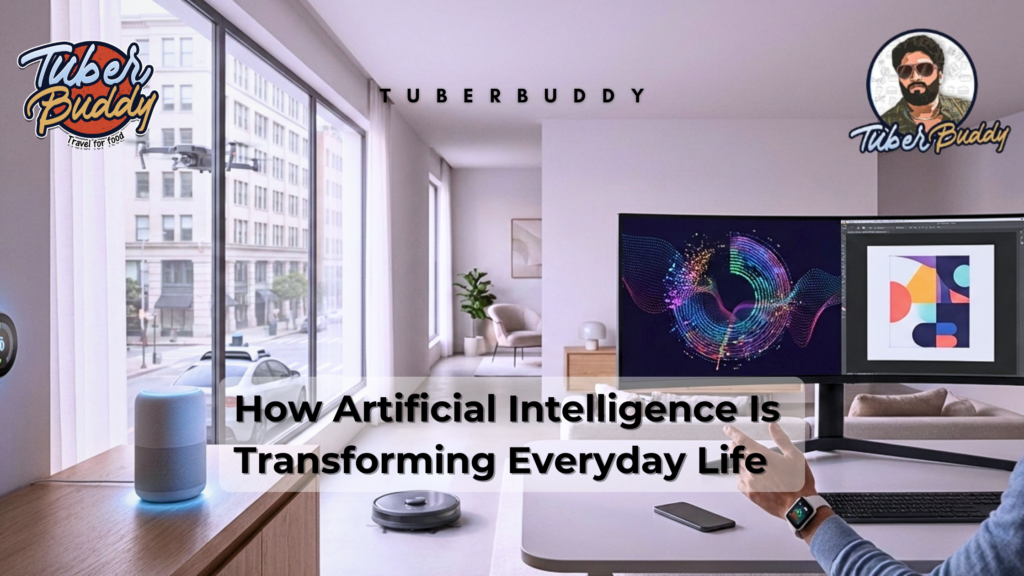
Artificial Intelligence (AI) is no longer a futuristic idea found only in science fiction novels but rather a part of our daily lives, accelerating change in how we communicate, work, shop, travel, and care for our health. It touches every part of our daily experiences; often we don’t even know that AI is contributing to that experience through smart recommendations via our mobile apps and intelligent systems removing redundant tasks from our daily workloads.
This blog examines how AI will continue to change our lives through innovative real-world applications and why AI will become one of the most important technologies in the evolution of the human race.
Understanding Artificial Intelligence in Simple Terms
AI is created by building sophisticated computer hardware or software (commonly known as intelligent systems) that will act as though they are mimicking human intelligence. An intelligent system is able to learn, recognize, and utilize data in ways similar to human beings. Intelligent systems will evolve and improve over time without the need of a human always working alongside them. AI differs from conventional programming because of its ability to adapt according to the information being utilized. Through this ability, AI is creating an innovative way to solve different problems in everyday life. To control and make effective use of AI, everyone needs to learn prompts, which are the communication language between humans and AI. They would interact; thus, learning how to prompt is necessary in the present scenario.
Artificial Intelligence in Communication and Daily Convenience
AI has drastically changed the way we communicate and find information through voice assistants, chatbots, and smart keyboards, which utilize artificial intelligence (AI) to process language, establish intent, and instantly respond.
When someone asks their virtual assistant for the day’s weather or uses a translation service powered by AI, or when a virtual assistant suggests how to respond to emails automatically, AI is taking the typical communication process out of the picture, enabling quick and simple communication while saving the user time.
AI in Healthcare and Personal Well-Being
AI is changing the healthcare field by improving diagnostic accuracy, creating treatment plans, and facilitating patient care. AI-powered programs can analyze medical information, recognize the development of potential health problems, and help physicians make better-informed clinical decisions.
In our daily lives, we can utilize AI-powered fitness applications, smart bands, and mental health applications to help maintain a balanced lifestyle by recording our health metrics, monitoring our level of activity, and keeping track of our progress over time.
Artificial Intelligence in Shopping and Entertainment
The introduction of Artificial Intelligence (AI) has improved how consumers shop online. It allows companies to provide their customers with recommendations of products relevant to them based on their online activity and previous purchases.
AI also aids in finding content in the entertainment marketplace by providing suggestions for movie, music, and video selections that fit the user’s specific interests. This way, customers find digital media platforms relatable and attractive, leading to increased engagement.
Smart Homes and AI-Powered Living
Smart home technology is reliant on the use of Artificial Intelligence (AI), which enables devices to automatically adjust temperature, light, security, and appliances according to how a user has behaved previously.
These smart systems increase comfort level, energy efficiency, and safety while making daily life easier and more sustainable.
Artificial Intelligence in Work and Business Operations
Many workplaces now rely on AI technologies to automate repetitive tasks, thereby increasing productivity and improving overall performance. Areas where AI can be used include analysis of data, customer service, and forecasting and inventory management.
For individuals, AI-enhanced tools, like scheduling software, document writing software, and organizing task lists, allow them to concentrate on more critical aspects of their job, such as developing ideas and strategies, than their routine job duties.
As businesses require custom AI software and remote monitoring systems for their growth and efficient utilization of resources, they look to AI app development company India as it changes its ecosystem and moves towards technological advancements.
AI in Transportation and Travel
AI is revolutionizing transportation with smart navigation systems, traffic forecasting services, and route-finding services. Services that include ride hailing, delivery, and navigational apps use AI extensively to optimize and reduce travel times and improve overall traveling safety.
AI has helped to enhance the online shopping experience by using collected browsing data, along with user preference and purchase history, to better tailor product recommendations for the individual consumer.
AI in Entertainment Space
In the entertainment space, AI can improve our ability to identify different types of content, such as movies, music, and videos, based on our existing interests and preferences. As digital platforms continue to improve, the more personalized the digital experience becomes, the more enjoyable and engaging it becomes.

Ethical Considerations and Responsible Use of AI
Artificial Intelligence (AI) offers many advantages, but it also presents numerous ethical challenges, including issues of privacy of data, discrimination, and lack of transparency. Responsible development of AI emphasizes fairness, responsibility, and use of secure data when designing and deploying AI.
As AI advances and becomes an increasingly prevalent part of everyday life, it will become very important to address these concerns so that society as a whole benefits from this advancement.
The Impact of AI on Everyday Life
As technology continues to improve, the impact of AI will continue to expand. New generations of AI systems will be able to operate much more naturally in ways similar to humans and integrate into our daily lives more completely.
The development of smarter cities, individual learning systems, and enhanced health care systems are just a few examples of how AI will change the way we live and interact with technology.
Artificial intelligence is changing how we live because it is automating processes, streamlining operations, and creating custom experiences through automation. From the development of health care services to the way we communicate to how we watch movies and engage with our homes, AI will improve efficiency while also providing a better overall user experience.
As AI continues to grow and evolve, it will create many new possibilities for innovation, convenience, and sustainable development within our everyday lives.
Negative Aspects of Artificial Intelligence
Artificial Intelligence (AI) has both advantages and disadvantages. One of the biggest issues with AI is that it can result in job losses due to the ability of AI to take over repetitive or lower-skill-level jobs. Another concern regarding AI is the protection of user data and privacy because AI relies on storing large quantities of users’ sensitive and private information. A third concern regarding AI is that it may cause AI to incorporate biases found in training data into the algorithms used by AI. Additionally, excessive reliance on AI may detract from human ability to make decisions and think critically, as well as limit the human ability to comprehend the decision-making processes behind AI due to the lack of transparency of AI-related systems. These concerns must be solved to ensure that AI can be responsibly and ethically applied in society. The negative aspect will go further, as it also affects the smartphone price and RAM and storage devices too.
Conclusion
Artificial Intelligence (AI) is changing how we live each day by enhancing the overall user experience with the increased ability of the device to be smart, fast, and more personalized. AI systems are being utilized to improve the operation and function of various technologies, including healthcare-related products, communication devices, entertainment systems, and smart home technologies. AI systems will allow us to interact with technology through various interfaces (such as touchscreens) while at the same time helping to improve the efficiency of our daily activities. As AI technology continues to develop and grow, it will play an even more important role in how we live our lives. AI will continue to create new avenues for innovation, convenience, and sustainable growth.
To know more about technology, food, health, travel, and lifestyle, visit the Tuber Buddy website.
Frequently Asked Questions (FAQs)
- What exactly is artificial intelligence (AI)?
Artificial intelligence is one of the many branches of technology that allow machines to mimic the cognitive abilities of humans, like learning, problem-solving, and decision-making abilities.
- How does AI affect my daily life?
AI assists us by providing a better level of convenience, personalization, efficiency, and automation by providing support in areas such as communication, healthcare, shopping, transportation, and other ways we interact with technology in our everyday lives.
- Can AI be used safely?
When used responsibly and the development of AI systems is done with proper data protection, ethical practices, and transparency, AI systems are considered safe to use.
- Will AI replace human workers?
AI has the potential to automate certain tasks, but it also creates additional job opportunities by enhancing worker ability to perform certain tasks, improving productivity, and allowing innovative solutions to develop.
- What will be the future of artificial intelligence?
The future of AI will be that it is integrated into our daily lives and will be supported with intelligent decision-making systems and by using technology to increase the productivity of humans, not to replace them.