
1.Introduction: The Evolution of AI in Digital Marketing
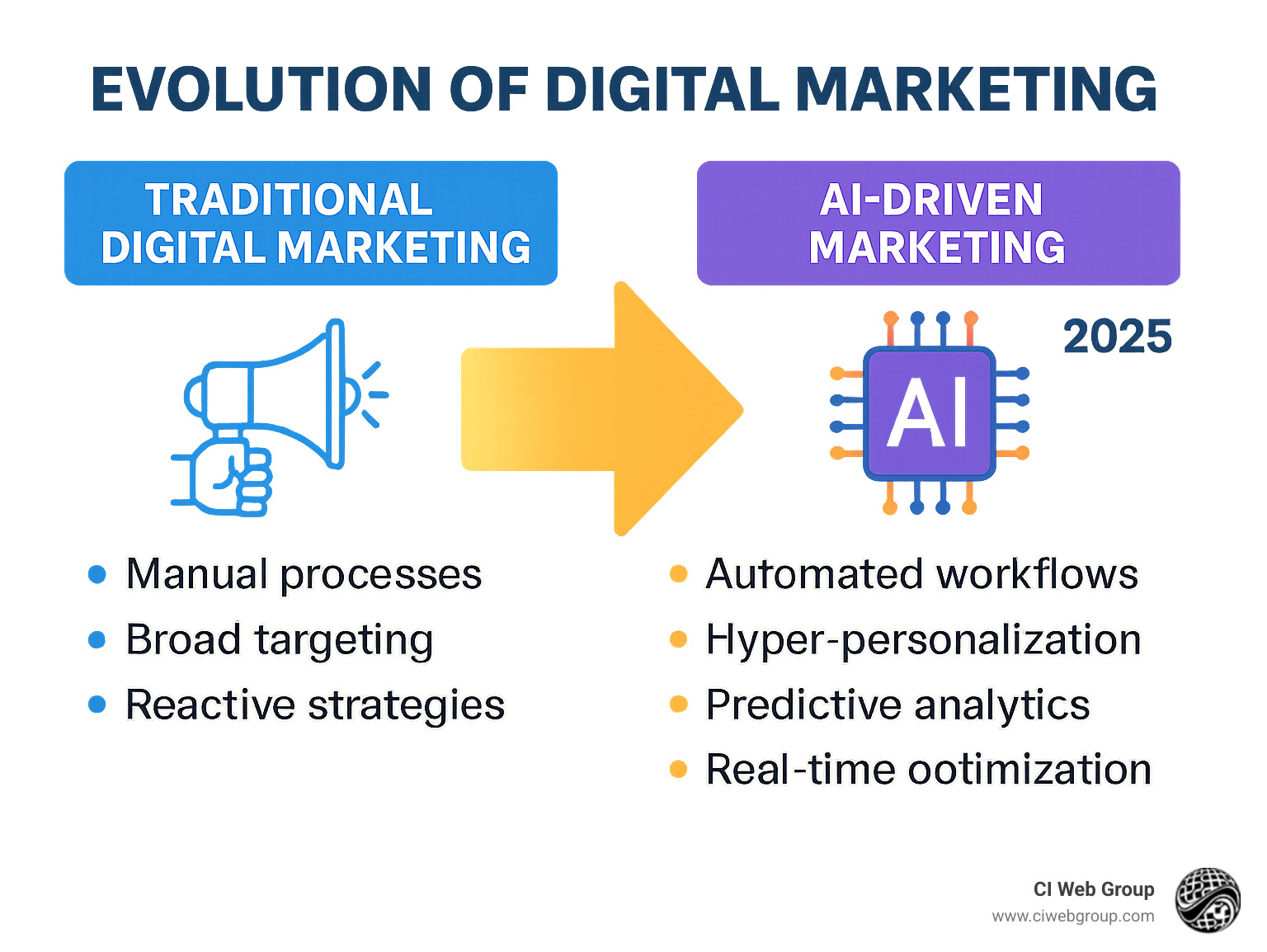
The digital marketing landscape has witnessed a revolution over the last decade, but nothing has disrupted the industry as dramatically as the emergence of Artificial Intelligence. In the quest for consumer attention, which lasts merely a few microseconds, AI Marketing Strategies 2026 has become the new competitive difference. What started as a set of tools has now evolved into a full-fledged infrastructure, automating decisions, predicting behavior, and delivering experiences at unprecedented scale.
Be it NLP, computer vision, reinforcement learning, or generative adversarial networks, the technical roots of the latest digital marketing innovations are all about AI. The marriage of big data, cloud computing, and real-time engines has created a world where marketers can execute campaigns across channels with surgical precision, at machine speed.
2.Key Challenges in the Digital Marketing Industry
Even with the technological advancements, there are structural and operational issues faced by digital marketers, which affect the efficiency of their campaigns. These issues need to be understood in order to realise the context behind the surge in AI adoption in 2026.
- Signal fragmentation between walled gardens like Google, Meta, and Amazon, making it difficult to attribute campaigns across channels
- Cookie-less tracking environments, with the deprecation of third-party cookies, are making it increasingly complex to target audiences
- Information overload, leading to decreased consumer attention span and increased ad fatigue
- Increasing speed of content demand, beyond the capabilities of human creativity
- Data fragmentation between existing systems, including CRM, CDP, and Analytics, making it challenging to develop a unified view of the customer
- Rising customer acquisition costs, negatively impacting return on ad spend
3. Impact of These Challenges
These are real financial implications. Industry benchmarks have shown that a lack of proper orchestration in these campaigns can lead to a waste of 26% of total digital ad spend. This is a staggering number when we consider that billions are spent in this space. In addition, misaligned personalisation can have negative brand equity implications. Now, 71% of consumers will stop interacting with a brand due to a lack of personalisation. The need to solve these compounding inefficiencies has made AI Marketing Strategies 2026 a competitive advantage, as well as a business imperative, for growth-stage and enterprise brands.
4.Technical Solutions and Methodologies
However, the current AI-based marketing platforms use multiple layers of technology to overcome the challenges mentioned above. The technologies used may include semantic data pipes, vector embedding models, multimodal foundation models, and closed-loop optimisation systems. The general architecture of the system may follow the Collect, Enrich, Activate, Optimise (CEAO) framework.
Components of the system may include: Customer Data Platforms (CDPs) with AI-based enrichment layers, identity resolution systems, and multi-touch attribution models that use Shapley value decomposition. The system may build a deterministic model of the customer journey to allow for precision budgeting..
5.Predictive Analytics and Machine Learning
One of the most developed forms of AI in the marketing world is represented by predictive analytics, which enables the prediction of customer lifetime value, churn probability, and propensity-to-convert using gradient boosting techniques like XGBoost and LightGBM, as well as recurrent neural networks and transformer-based models designed specifically for time series prediction.
As a result, brands are able to use these models to predict customer propensity in real-time based on behavioural data like session depth and scroll velocity, and then integrate these propensity scores in real-time decisioning engines to drive campaigns. Brands that have leveraged predictive models of customer lifetime value have seen 20-35% improvement in the efficiency of their media spend as a whole.
6.Hyper-Personalisation Engines
The days of segmented email campaigns and static web content are long behind us, as hyper-personalisation engines, driven by deep learning-based recommendation systems and real-time event streaming architectures (Apache Kafka, AWS Kinesis), enable hyper personalised experiences across all digital touchpoints, dynamically adapting content, pricing, imagery, and calls-to-action based on each customer’s distinct behavioural signature.
Collaborative filtering with contextual bandits enables personalisation systems to optimise for both exploration (exploring new customer preferences) and exploitation (leveraging known high-performing content). This approach has been proven to increase email click-through rates by up to 41% and e-commerce conversion rates by 18-27%, revolutionising the definition of content ‘relevance’ in digital experiences.
7. AI-Powered Content Generation
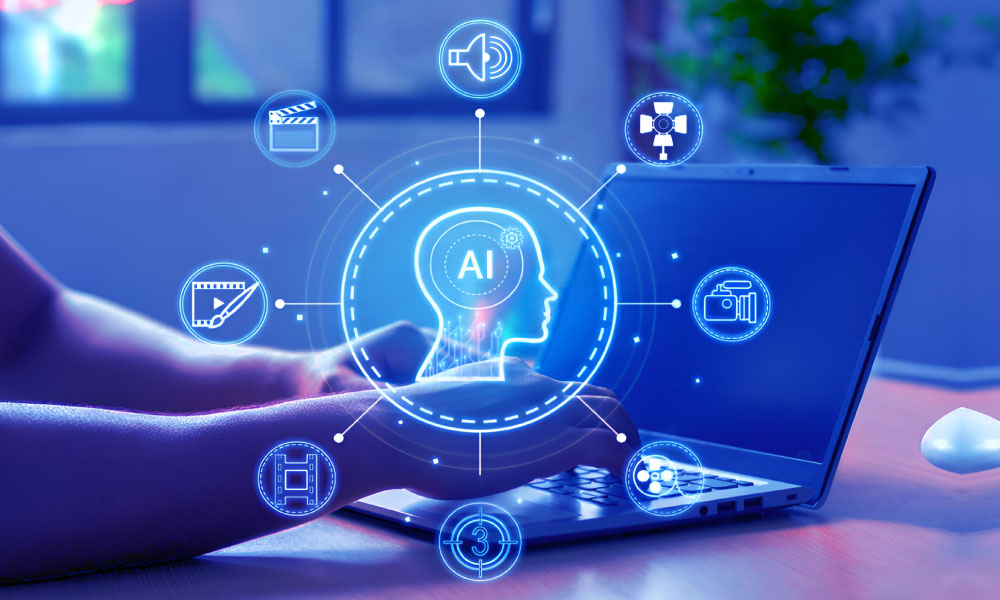
Generative AI technology has sparked a paradigm shift in content generation and creation. Large Language Models and image synthesis technology have enabled marketing teams to generate SEO-optimised content, product descriptions, social media content, and display ads in a matter of minutes instead of weeks or even months. RAG technology guarantees consistency in brand voice through the use of proprietary knowledge bases.
The most advanced AI Marketing Strategies 2026 are based on a hybrid model of human-AI collaboration rather than relying on the power of AI technology alone. The former is based on a division of labour between the two, in which AI is leveraged for ideation, first drafts, variant generation, and localisation, and human experts are engaged in narrative architecture, ethics, and differentiation.
8.Programmatic Advertising and Smart Bidding
From a real-time bidding process to a sophisticated artificial intelligence-driven advertising ecosystem in which bid decisions are based on a variety of context-based inputs, all processed in fewer than 100 milliseconds, programmatic advertising has come a long way. Smart bidding algorithms, based on multi-armed bandit optimisation and contextual reinforcement learning, enable real-time bidding decisions based on factors such as conversion probability, intent data, device context, and auction competition.
In 2026, demand-side platforms will increasingly use first-party data clean rooms and privacy-preserving models such as federated learning models to maintain the precision of targeting in a cookieless world. This is a critical component in a complete framework for AI Marketing Strategies 2026..

9.Conversational AI and Chatbots
However, conversational AI has moved beyond its humble beginnings as a straightforward FAQ deflect-and-automate solution. Enterprise-grade conversational AI solutions, based on large language models with tool use capabilities, have evolved to the point where they can act as autonomous sales development representatives, qualifying leads, overcoming objections, scheduling demos, and even processing transactions within a single conversation thread. This is enabled through the use of dialogue state tracking, intent classification, and sentiment analysis to manage complex conversations with contextual coherence. Furthermore, the ability to integrate with CRM systems via a bi-directional API pipeline has enabled the creation of a seamless interaction between human and machine, a capability which has resulted in a 30-50% reduction in cost per lead for brands that have adopted the technology.
10.Benefits and Real-World Applications
The tangible effects of AI adoption in digital marketing, as demonstrated across industry segments, are undeniable:
- E-commerce: AI-powered pricing engines, enabled by reinforcement learning, result in gross margin improvements ranging between 8 and 15 per cent without compromising competitive positioning
- B2B SaaS: Predictive lead scoring reduces sales cycles by 22 per cent on average, thus accelerating revenue realisation
- Retail Media: AI-optimised sponsored product placement increases retailer ad revenue by 35 to 60 per cent over traditional, non-AI-powered campaign management methodologies
- Financial Services: Compliant, AI-powered personalised customer communications result in 19 per cent lower churn, with all disclosure requirements satisfied
- Healthcare Marketing: Propensity modelling for patient engagement increases appointment conversion rates by 28 per cent, with all HIPAA requirements satisfied
These achievements, however, do not represent anecdotal success stories. Instead, they represent the cumulative advantage provided by AI Marketing Strategies 2026, delivered in a unified framework of data and technology.
11.Future Trends and Innovations
Looking forward to 2026 and beyond, there are emerging technologies that have the potential to continue to influence the digital marketing AI landscape:
- Agentic AI Systems: Autonomous marketing agents that can execute end-to-end marketing campaign workflows independently of human intervention
- Multimodal AI: Simultaneous processing of text, images, audio, and video to build cohesive marketing narratives
- Synthetic Audience Modelling: Digital twinning of customer segments to validate marketing campaigns before deployment
- Edge AI for Real-Time Personalisation: AI models that can execute personalised marketing experiences without the need for latency and data transfer important for mobile-first markets
- Neuro-Symbolic AI: The use of logic and human regulations to make marketing decisions through the use of AI models that combine the advantages of deep learning and symbolic processing
These emerging technologies will require marketers to transition from being technology users of AI to marketing architects of AI-based marketing organisations a professional shift that is currently happening in many of the world’s leading brands.
12.Conclusion
The integration of artificial intelligence across the digital marketing value chain represents a fundamental structural transformation rather than a passing trend. AI Marketing Strategies 2026 encompass advanced capabilities such as predictive analytics, hyper-personalisation engines, generative content systems, and autonomous campaign optimization—forming a comprehensive, performance-driven marketing ecosystem.
Organisations that embed AI as a core operational capability rather than a tactical add-on will achieve superior outcomes in strategy execution, customer engagement, and continuous optimisation. Platforms like Tuber Buddy enable this transformation by providing data-driven insights, advanced optimisation tools, and scalable content and marketing intelligence solutions.
In 2026, competitive advantage is defined by how effectively businesses operationalise AI at scale, integrating technical precision, data governance, and human expertise to build resilient, high-performance marketing systems.
13. Frequently Asked Questions (FAQ)
Q1: What are AI Marketing Strategies 2026?
A comprehensive AI marketing strategy that oversees the entire marketing process, as opposed to the isolated marketing tools previously.
Q2: Is AI marketing suitable for SMBs?
Yes, as indicated by the availability of AI marketing tools like HubSpot AI, Klaviyo, and Google Performance Max.
Q3: How does AI handle data privacy?
Through data privacy techniques like federated learning.
Q4: What are the essential skills in AI marketing?
Data literacy, knowledge of AI tools, and marketing strategy.
Q5: What is the ROI of AI marketing?
Efficiency gain of 15-40%, cost reduction, and an increase in customer lifetime value.