
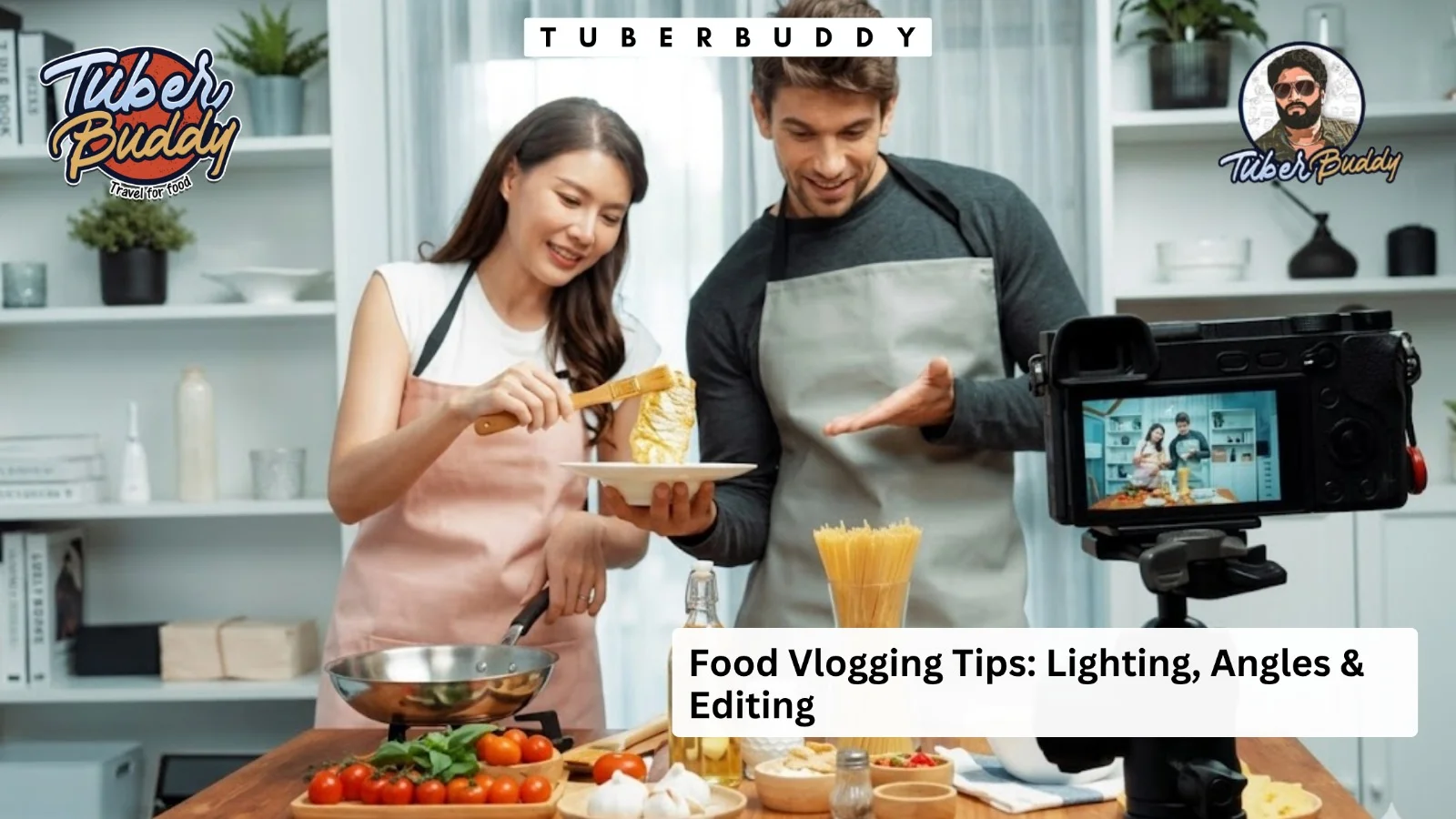
Food vlogs have emerged as one of the fastest-growing niche topics on platforms such as YouTube, Instagram, and TikTok. In today’s world, with so many chefs posting content, it is no longer sufficient to make amazing food; it also means creating amazing visuals and angles.
This is a complete Food Blogging Tips guide that will highlight all the important aspects related to lighting, angles, and even editing which could take your content to the next level.
Why Food Vlog Quality Is Important
People “eat” with their eyes first. Your visual presentation is what decides whether the viewer will continue watching your video or scroll past it. High-quality visuals:
Boost watch time
Enhance engagement (likes, shares, comments)
Help videos go viral
Build an impressive personal brand
Take a look at this Food Vlogging Tips guide right now.

Lighting Tips for Food Vlogs
Lighting can be regarded as the most important thing when producing food-related videos.
In case the food is beautiful, but poorly lit, it won’t look appealing.
- Utilizing Natural Light
Natural light is kind and helps emphasize the true colors of food.
Tips:
- Place the video near a window.
- Put soft curtains close to the windowsill to soften light.
- Avoid filming during the brightest hours since the light will shine directly onto your dish.
Optimal time periods include mornings (7-10 am) and afternoons (4-6 pm).
- Artificial Lighting Arrangement
If you cannot take advantage of natural light, consider purchasing:
- Ring lights.
- Softbox lights.
- LED panels.
Pro tip: Two-light arrangement is recommended.
- Key light.
- Fill light.
- No Mixing of Warm and Cool Lights
Using light of different temperatures may result in strange colors.
- It is advised to always use only one temperature of lighting:
- Yellow – warm and cozy lights.
- White – to emphasize freshness of food.
- Backlighting for Creating Extra Effect
- Create an extra light source behind the dish being filmed.
- It adds extra texture and steam effect to the dish.
- Ideal for hot food such as biryani, noodles, and grilled food.
Highlighting Food Texture and Composition
Right lighting emphasizes:
- Crispy texture of food.
- Freshness of food.
- Food ingredients and layers.
These effects require side lighting

Best Angles for Taking Food Videos
Angles determine how your viewers see the food. Below are some best angles that you should consider when taking a food video.
- Top Down View
Best for:
- Thalis
- Pizzas
- Desserts
- Lays
Why this angle?
Gives a clean composition
Highlights entire dish setup
- 45-Degree Angles
This is the most natural way of seeing food.
Ideal for:
- Restaurant food
- Plated foods
It mimics how we see food when we sit at a table.
- Macro/Close-Up Angles
Capture food close-up:
- Cheese pull
- Food dripping sauces
- Cracking food
This will make your viewers crave the food instantly.
- Action Shots
Capturing action shots:
- Pouring coffee
- Cutting cakes
- Breakage of dosa
- Cooking
Gives your viewers a story to watch.
- Slow-Motion Shots
Capture food actions in slow-motion:
- Sizzling oil
- Pouring of sauce
- Steam rising from the pan
This will enhance the appearance of the food and your content as well.
- POV Shots (Point Of View)
Film videos as though your viewers are eating food:
- Taking bites
- Holding food in hands

Food Vlogging Editing Guidelines
Editing is what turns raw material into a professional-looking video. Here are some Food Vlogging Guidelines to make your videos more professional.
- Keep It Brief & Interesting
People have short attention spans, especially when watching videos on Instagram Reels and TikTok.
Optimal duration:
Reels/Shorts: 15-30 seconds
YouTube video: 5-10 minutes
- Incorporate Trending Music
It sets the tone and increases the viewership.
Select:
Upbeat tunes for street food
Soft songs for fancy food
- Color Correction & Grading
Adjust:
- Brightness
- Contrast
- Saturation
It ensures that the food looks appealing yet realistic.
- Insert Fast Edits & Transitions
Prevent lengthy and dull shots.
Apply:
- Jump cuts
- Transitions
- Speed ramps
- Include Text & Captions
Add the following information:
- Dish name
- Price
- Place
- Ingredients
It helps viewers comprehend the information instantly.
- Incorporate ASMR Sound Effects
Record:
- Sounds of crunches
- Sound of frying
- Sounds of pouring liquid
ASMR sounds increase engagement.
- Top Editing Software Options
Utilize user-friendly applications like:
- CapCut
- Adobe Premiere Pro
- InShot
- Final Cut Pro
:max_bytes(150000):strip_icc()/foodvlogging-ft-0218-95b1cea03f0d4cccac5b98b65663b57d.jpg)
More Tips for Growing Your Food Vlogging Channel
- Focus on Storytelling
Don’t just show the food; share its story:
- How did it come into existence?
- What makes it special?
- Employ Location Tags
That way, the locals in your area will be able to find your content.
- Be Consistent With Posting Times
Always post regularly:
3-5 times a week
- Collaborate with Brands and Food Establishments
Grow faster by leveraging:
- Advertising campaigns
- Product reviews
- Collaborations
- Optimize Videos for SEO
Incorporate relevant search terms like:
- Food vlogging tips
- Best food vlogging setup
- Food video editing tips
- Food photography for beginners

Conclusion
Understanding Food Vlogging Tips, particularly lighting, angles, and editing, can greatly improve your video production quality and viewer experience. Even if you are an amateur or professional vlogger, making sure that your videos have these elements will help create better-quality content that grabs the attention of your audience.
Important Notes:
- Good lighting helps the food look good
- Correct angles bring out a story
- Effective editing keeps the viewer engaged
Craving more delicious stories? Follow Tuber Buddy today!
FAQs
1. What is the best lighting for food vlogging?
Natural light is the best. If unavailable, use softbox or LED lights with consistent color temperature.
2. Which camera is best for food vlogging?
You can start with a smartphone. Advanced creators can use DSLR or mirrorless cameras.
3. What angle is best for food videos?
Top-down and 45-degree angles work best for most food shots.
4. Which app is best for editing food videos?
Popular apps include CapCut and Adobe Premiere Pro.
5. How can I make my food videos look professional?
Focus on:
- Good lighting
- Clean background
- Stable camera
- Smooth editing
6. How often should I post food vlogs?
Posting 3–5 times per week helps grow faster.
7. Can I start food vlogging with a phone?
Yes, many successful creators use smartphones with good lighting and editing.