
Wireless communication has changed a lot in the last few decades. We used to have 2G voice calls. Now we have high-speed 5G networks. These 5G networks are used in cities and for IoT and real-time connectivity.
People are still working on getting 5G in the world.. The technology world is already thinking about what is next. There is a lot of talk about 6G versus 5G. Researchers and tech leaders want to know what comes next in communication. They are looking at what wireless communication will be like, after 5G.
This blog explains the key differences between 5G and 6G, their capabilities, and how 6G is expected to transform the future of connectivity.
Understanding 5G Technology
5G is the generation of wireless technology. This technology was made to give people faster speeds when they are online. It also gives them low latency, which means they do not have to wait for things to happen. It can connect a lot of devices at the same time. 5G supports things like:
- High-speed mobile internet
- Video streaming in 4K/8K
- Smart homes and smart cities
- Autonomous vehicles
- Industrial automation and IoT
With peak speeds up to 10 Gbps and latency as low as 1 millisecond, 5G is a major upgrade from 4G. However, as digital demands continue to grow, limitations in capacity, energy efficiency, and real-time intelligence have opened the door for the next generation—6G.
What is 6G technology?
6G is the sixth generation of wireless communication that will be commercially launched around 2030. Still in its research and development phase, 6G is targeted to be for more than just speed; instead, it aims to be intelligent, immersive, and human-centric connectivity.
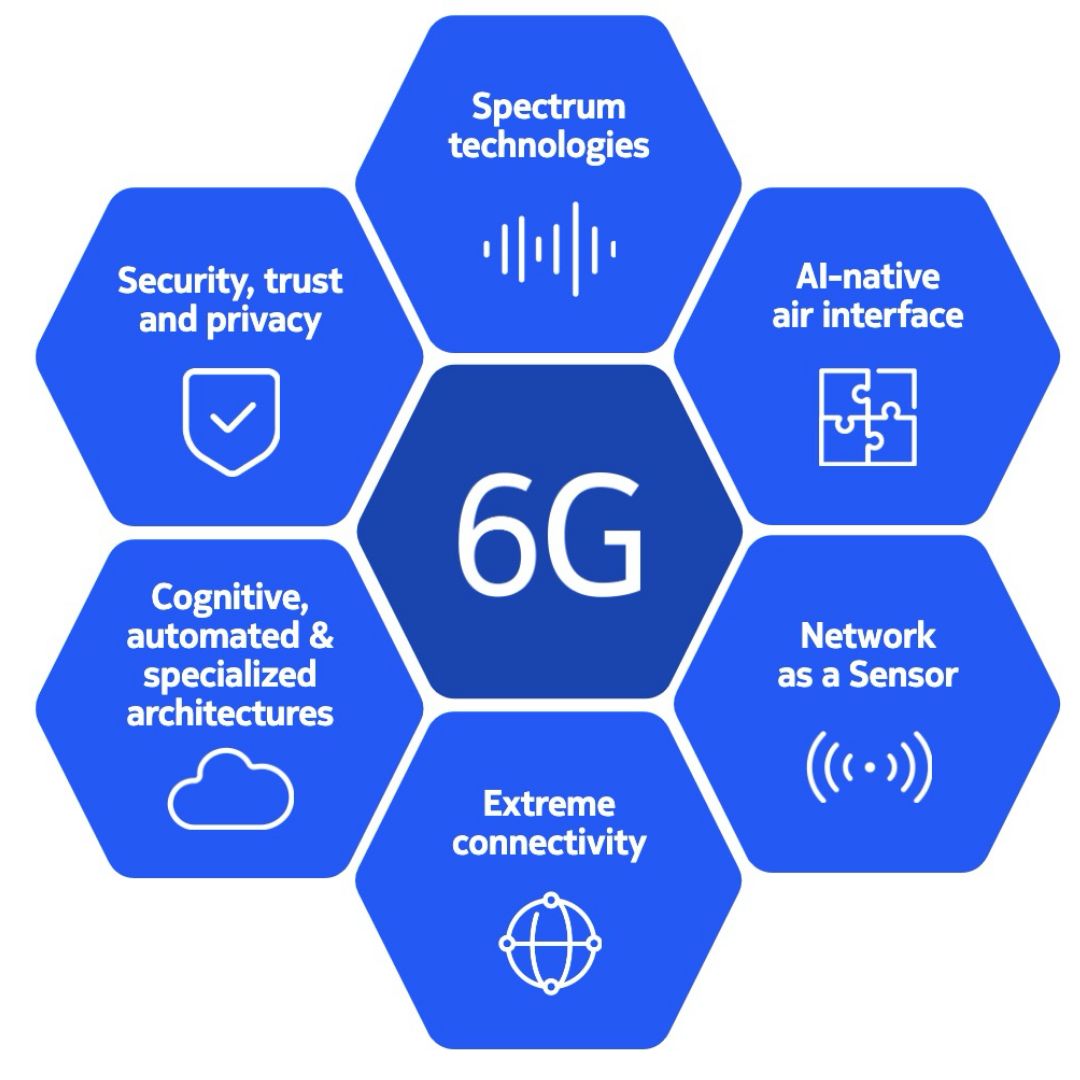
6G will be empowered with integrated technologies including
- Artificial Intelligence and Machine Learning
- THz frequency bands
- Communicating holographically
- Extended reality includes XR, AR, and VR.
- Smart sensing and automation
Nevertheless, 6G is not about faster data; rather, its goal is to be smarter and more adaptive networks.

6G vs 5G: Key Differences
Understanding 6G vs 5G means looking into performance, capabilities, and future use cases.
1.Speed and Data Rates
5G: Up to 10 Gbps
6G: Expected up to 1 Tbps-100 times faster than 5G.
6G will enable almost instant data transmission, rendering lag nearly obsolete.
2.Latency
- 5G: ~1 millisecond
- 6G: less than 0.1 ms
Ultra-low latency will allow many real-time applications such as remote surgery and autonomous systems.
3.Frequency Spectrum
- 5G: Uses sub-6 GHz and mmWave frequencies
- 6G: Operate on THz bands
THz frequencies do support much higher data rates; however, advanced infrastructure is required for their deployment.
4.Intelligence
- 5G: Limited AI Integration
- 6G: AI-native networks
6G networks will be self-learning, self-optimizing, and predictive.
5.Connectivity Scale
- 5G: Massive IoT supported
- 6G: ultra-massive IoT and smart environments supported
6G will connect everything—from devices to vehicles, buildings, and even human senses.

Applications of 6G Technology
Future applications of 6G are far beyond current mobile use cases:
- Holographic communication in meeting and education
- Advanced AR/VR and metaverse experiences
- Smart health care, including real-time remote surgeries
- Autonomous transport systems
- Digital Twins for Cities, Factories, and Infrastructure
- Brain-computer interfaces (long-term vision)
These innovations really pinpoint how 6G vs 5G is more about transformation, not just an upgrade.
Challenges in the Development of 6G
Despite the promise of 6G, it also faces the following challenges:
- High infrastructure cost
- Energy efficiency concerns
- Spectrum regulation and standardization
- Data Privacy and Security Risks
- Global adoption and compatibility
Researchers and governments around the world are busy finding ways to make 6G not only feasible but also sustainable.
When Will 6G Replace 5G?
5G is going to further evolve and coexist with 6G for many years. Full-scale 6G deployment is expected around 2030–2035, meaning businesses and consumers will rely on 5G well into the next decade.
Conclusion
A look at 6G vs. 5G promises the future of wireless to be faster, wiser, and more immersive. While 5G is changing industries today, 6G is going to change the way humans and machines interact with the digital world-from AI-driven networks to holographic communication. This is one monumental leap to the hyper-connected future.
Don’t miss out—follow Tuber Buddy for fresh and exciting blog updates.
FAQs
1. What is the main difference between 6G and 5G?
The main difference in 6G vs 5G is speed, intelligence, and capability. 6G will be significantly faster, AI-driven, and designed for immersive applications.
2. Is 6G available now?
No, 6G is still in the research phase. Commercial deployment is expected around 2030.
3. Will 6G replace 5G completely?
6G will eventually complement and then replace parts of 5G, but both will coexist for many years.
4. How fast will 6G be compared to 5G?
6G is expected to be up to 100 times faster than 5G.
5. What industries will benefit most from 6G?
Healthcare, smart cities, manufacturing, transportation, education, and entertainment will benefit significantly from 6G technology.